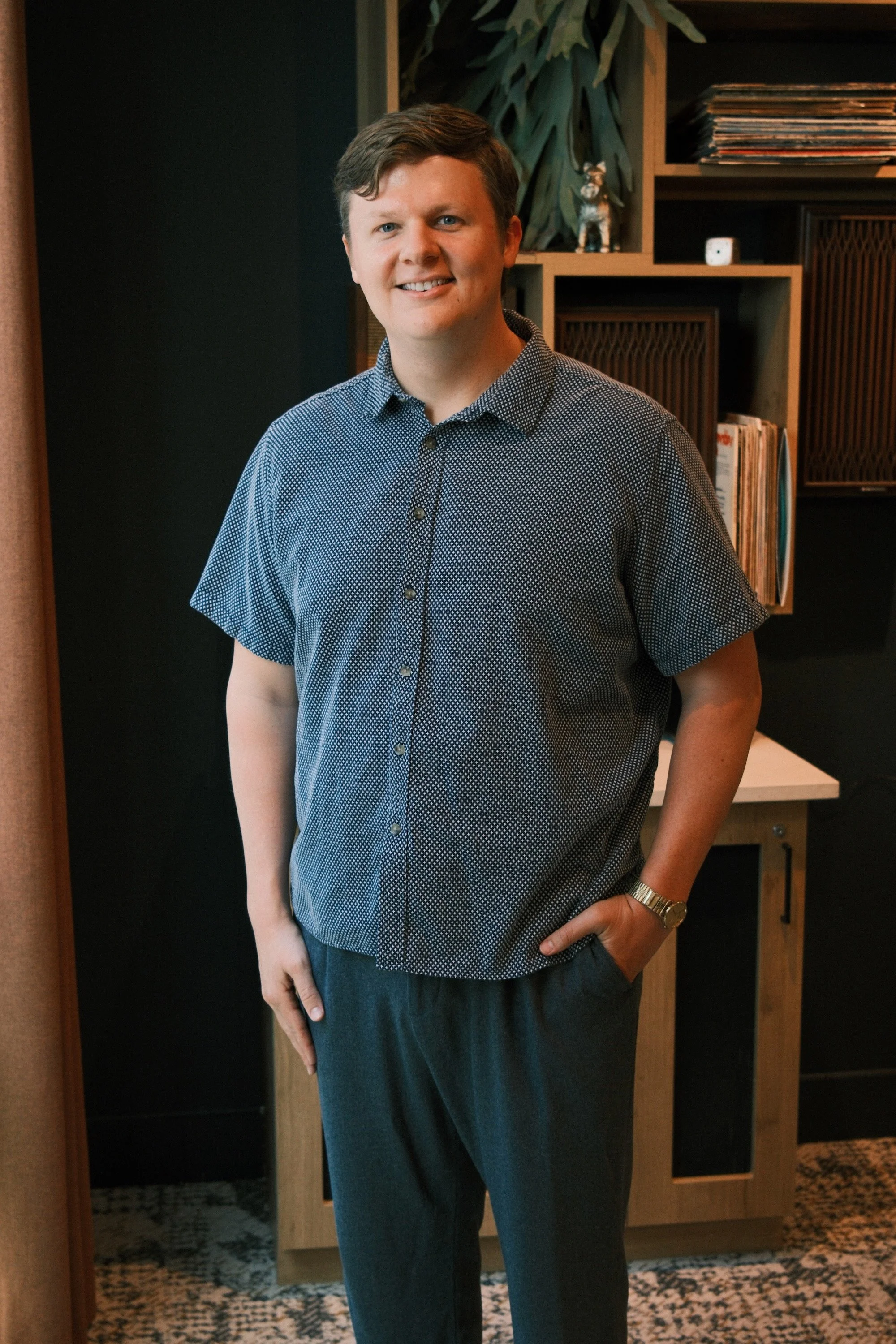
Meet Zeb White, M.S., CCC-SLP
I am a Texas-licensed speech-language pathologist based in Austin, with specialized clinical, research, and professional experience in stuttering.
One of my earliest clinical supervisors was a person who stutters. From the beginning of my training, I saw clearly that people who stutter can be excellent, compelling, and effective communicators without hiding who they are or trying to eliminate every moment of stuttering.
That understanding continues to shape my work today.
I created Austin Stuttering & Communication Therapy to offer adults a more specialized and personal kind of support—care that considers the whole communication experience, not only how often someone stutters.
Specialized training and experience in stuttering
Clinical experience
I have worked with people who stutter across the lifespan, from young children and families to college students, working adults, and older adults across educational, research, and clinical settings.
My clinical experience includes work at the Arthur M. Blank Center for Stuttering Education and Research, where my work centered on supporting people who stutter.
These experiences gave me the opportunity to support people with a wide range of communication goals, life experiences, and perspectives on stuttering.
Research and advanced training
I earned my master’s degree in Speech-Language Pathology from Vanderbilt University, where I worked in Vanderbilt’s developmental stuttering research laboratory studying the nature and treatment of stuttering.
I later conducted stuttering research at The University of Texas at Austin that has been published in peer-reviewed journals, including the Journal of Speech, Language, and Hearing Research and the American Journal of Speech-Language Pathology.
My additional professional development has included training in Avoidance Reduction Therapy for Stuttering (ARTS®), the Blank Center CARE™ Model, Acceptance and Commitment Therapy, solution-focused brief therapy, and other participation-focused and evidence-based methods for supporting people who stutter.
Why an adult-focused stuttering practice?
Stuttering is complex, dynamic, and deeply personal. It can affect much more than the visible moments of speech.
Many speech-language pathologists receive limited clinical experience with stuttering, and many adults struggle to find care that feels truly specialized. Too often, stuttering is treated as one service among many in a pediatric or general speech clinic.
I wanted to create something different.
Austin Stuttering & Communication Therapy is intentionally focused on adults who stutter. The goal is to provide a space where clients do not have to explain why stuttering matters, where therapy is not automatically centered on perfect fluency, and where the work connects directly to real life.
That may mean speaking more openly at work, participating in college, navigating interviews or presentations, building relationships, advocating for yourself, or simply feeling more comfortable saying exactly what you want to say.

What working together may look like
My approach is collaborative, practical, and grounded in the belief that successful communication is about much more than fluency.
Therapy may involve reducing avoidance, examining thoughts and emotions around speaking, building self-advocacy skills, practicing difficult communication situations, learning more about stuttering, and exploring speech strategies when they are relevant to your goals.
I want therapy to connect to your actual life—not remain inside the therapy session.
We will pay attention to how you are doing, how communication is affecting your work and relationships, what you are holding back from, and what meaningful change would look like for you.
The goal is not to turn you into a different person. It is to help you communicate with greater comfort, openness, and freedom.